At a Glance: Ladakh Inner Line Permit (ILP) Regulations (2027 Guide)
Ladakh is not merely a high-altitude dream destination — it is one of India's most strategically sensitive geopolitical frontiers, bounded by Pakistan along the Line of Control (LoC) and China along the Line of Actual Control (LAC). To balance national security with responsible tourism, civilian transit into border valleys like Nubra, Pangong, Tso Moriri, and Hanle requires an authentic Inner Line Permit (ILP). Navigating the official LAHDC Leh portal, avoiding broker markups, and understanding why carrying physical paper photocopies is an absolute operational necessity will ensure a frictionless Himalayan expedition in 2027.
Guide Navigation & Key Modules
Module 1: What is the Ladakh Inner Line Permit (ILP) & Who Needs It in 2027?
An Inner Line Permit (ILP) is an official travel authorization issued by the Ladakh Autonomous Hill Development Council (LAHDC) on behalf of the district administration. It allows civilian travelers to cross designated military control lines and enter sensitive border tracts.
1. Protected Areas Requiring an ILP vs. Exempt Zones
| Circuit Sector | Key Destinations Covered | Permit Required? | Border Sensitivity Status |
|---|---|---|---|
| Nubra Valley | Diskit, Hunder Sand Dunes, Sumur, Panamik Hot Springs, Turtuk, Tyakshi | MANDATORY ILP | Near Pakistan LoC (Turtuk sector opened in 2010) |
| Pangong Tso | Spangmik, Man, Merak, Chushul | MANDATORY ILP | Bordering China LAC (High-security military corridor) |
| Changthang & Tso Moriri | Korzok Village, Chumathang, Mahe, Tsaga La | MANDATORY ILP | High-altitude wildlife sanctuary & nomadic Tibetan borderlands |
| Hanle Dark Sky Reserve | Hanle Observatory, Khaldo, Pughtse | MANDATORY ILP | Special Dark Sky Reserve & Indian Astronomical Observatory |
| Leh Town & Local Monasteries | Leh Palace, Shanti Stupa, Shey, Thiksey, Hemis, Sindhu Ghat | NO PERMIT NEEDED | Civilian municipality zone (100% free movement) |
| Sham Valley (Lower Ladakh) | Alchi, Likir, Hall of Fame, Magnetic Hill, Indus-Zanskar Sangam | NO PERMIT NEEDED | National Highway 1 corridor towards Kargil |
2. Domestic (Indian) Tourists vs. Foreign Nationals
- Indian Citizens: Can apply individually or as a family/group directly via the online portal. The permit is typically issued with a validity window of up to 3 weeks (21 days).
- Foreign Nationals & OCI/PIO Cardholders: Governed by the Foreigners (Protected Areas) Order, 1967. Foreign tourists require a Protected Area Permit (PAP) rather than an ILP. Under Ministry of Home Affairs (MHA) regulations, foreign passport holders must apply in groups of at least two persons through an authorized, registered local Ladakhi travel agency. Certain sensitive border sectors (such as Turtuk, Chushul, or Tsaga La) remain off-limits to foreign tourists without special central home ministry clearance.
Module 2: The ONLY Official LAHDC Booking Engine & Step-by-Step Portal Walkthrough
To eliminate illegal broker markups and long queues at the DC Office in Leh, the administration streamlined permit generation through a unified digital portal.
1. The Authorized Portal vs. Third-Party Broker Scams
All genuine permits must be processed exclusively through the official LAHDC administration portal: https://lahdclehpermit.in/.
2. Step-by-Step Digital Application Pipeline
- Portal Registration: Visit lahdclehpermit.in and select "Domestic Tourist". Enter your mobile number and email ID to generate your secure login OTP.
- Passenger Details: Fill in full names, gender, age, nationality, and exact government photo ID numbers (Aadhaar Card, Passport, Voter ID, or Driving License) for every traveler in your group.
- Circuit Selection: Check the boxes for the circuits you intend to visit: Nubra Valley, Pangong Tso, Changthang (Tso Moriri), and Hanle. Always check all intended circuits upfront; adding new circuits later requires re-applying and paying new transaction fees.
- Fee Payment: Pay the consolidated environmental, wildlife, and Red Cross fees through the integrated payment gateway (UPI, debit/credit cards, or Net Banking).
- Download Watermarked PDF: Once payment is confirmed, instantly download the official generated PDF containing the unique LAHDC QR barcode, official electronic signature, and passenger roster.
Module 3: Exact Statutory Fee Structure & The Mandatory 6-8 Printouts Rule
The government fee structure is statutory, transparent, and reinvested directly into Ladakh's fragile high-altitude ecology:
| Fee Component | Statutory Rate | Billing Basis | Purpose & Fund Utilization |
|---|---|---|---|
| Environment & Ecology Fee | ₹400 per person | One-time per visit | Waste management, carbon mitigation & high-altitude conservation |
| Wildlife Protection Sanctuary Fee | ₹20 per person / day | Per day spent in protected zones | Preservation of Snow Leopards, Black-Necked Cranes & Kiang wildlife |
| District Red Cross Society Fund | ₹100 per person | One-time per visit | High-altitude humanitarian aid, mountain rescue & oxygen ambulances |
| Total Standard 7-Day Tour Cost | ₹540 – ₹600 per traveler | Consolidated total | Statutory government fee (zero hidden charges) |
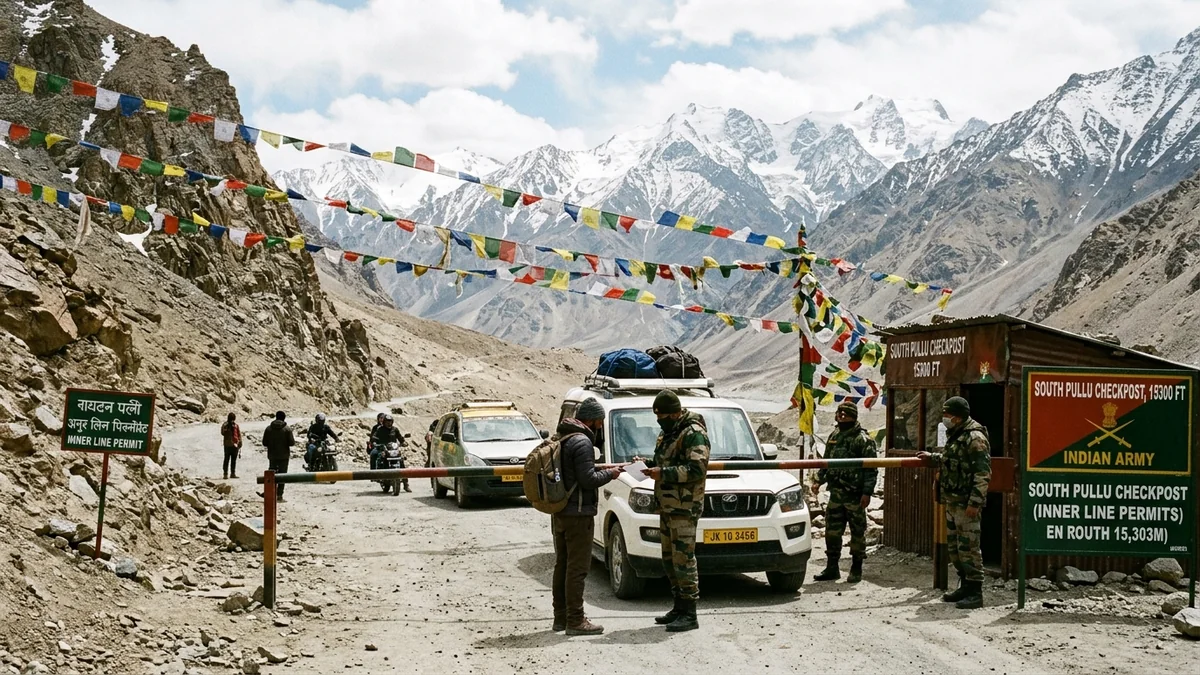
High-Altitude Operations Head Sachin Chauhan's Golden Rule: "The single most frequent rookie mistake travelers make in Ladakh is saving their permit as a PDF on their smartphone and assuming that is sufficient. Remote military checkpoints like South Pullu, North Pullu, Tangtse, and Loma are situated at 15,000+ feet in complete telecom dead zones with zero 4G/5G signals. Army jawans will NOT look at smartphone screens. They physically collect, stamp, and file a paper photocopy at each gate. Every family must carry at least 6 to 8 physical hard copies of their stamped permit along with photocopies of matching photo IDs."
Module 4: Checkpoint Navigation & Circuit Regulations (Nubra, Pangong, Hanle, Chushul)
Along the high-altitude highways of Ladakh, specialized military and Jammu & Kashmir / Ladakh Police checkpoints regulate vehicle movements:
1. Key Military & Police Barrier Gates
- Khardung La / Nubra Valley Circuit: You will clear two checkpoints — South Pullu (near Leh, before climbing Khardung La at 15,300 ft) and North Pullu (on the northern descent towards Diskit). Each checkpoint takes 1 physical copy.
- Pangong Tso Circuit: Checkpoint at Tangtse (25 km before the lake). Your driver deposits a hard copy and registers passenger headcounts.
- Direct Shyok River Route (Nubra → Pangong): Checkpoint at Agham Bridge and Durbuk. Verifies permits before vehicles take the rugged riverside bypass.
- Hanle & Changthang Circuit: Highly sensitive security sector monitored at Loma Checkpost (where the road splits towards Hanle and Nyoma). Strict verification of names and IDs against border rosters.
Hanle Dark Sky Reserve Protocols
Located at an elevation of 14,764 feet, Hanle hosts the world-renowned Indian Astronomical Observatory (IAO), home to one of the world's highest optical telescopes. As India's first designated Dark Sky Reserve, strict light pollution discipline is enforced after sunset. High-beam driving, flashing vehicle lights, outdoor laser pointers, and bright campfires are strictly forbidden within a 10 km radius of the observatory to preserve astronomical clarity for space scientists.
Module 5: Offline Verification at Tourist Information Centre (TIC) Leh
While 90% of permits are processed digitally without human intervention, self-drive enthusiasts, solo motorcyclists, and travelers encountering payment gateway timeouts can complete verification offline:
- TIC Location: Tourist Information Centre (TIC), Ground Floor, DC Office Complex, Leh town.
- Operational Timings: 09:00 AM to 05:00 PM (Monday through Saturday; closed on public holidays).
- When Offline Stamping is Needed: If the online portal generates an "Unverified Transaction" receipt or if there is a typographical error on your ID details.
"When you book our signature 7-Day Leh Ladakh tour, our on-ground Leh operations desk processes your official LAHDC Inner Line Permits, pays all statutory environmental fees, and prepares a waterproof docket containing 8 laminated printouts before your flight lands at Kushok Bakula Rimpochee Airport (IXL). You spend Day 1 resting and acclimatizing at your luxury hotel with zero paperwork anxiety."
7D/6N Leh Ladakh Nubra & Pangong Tso Discovery Tour
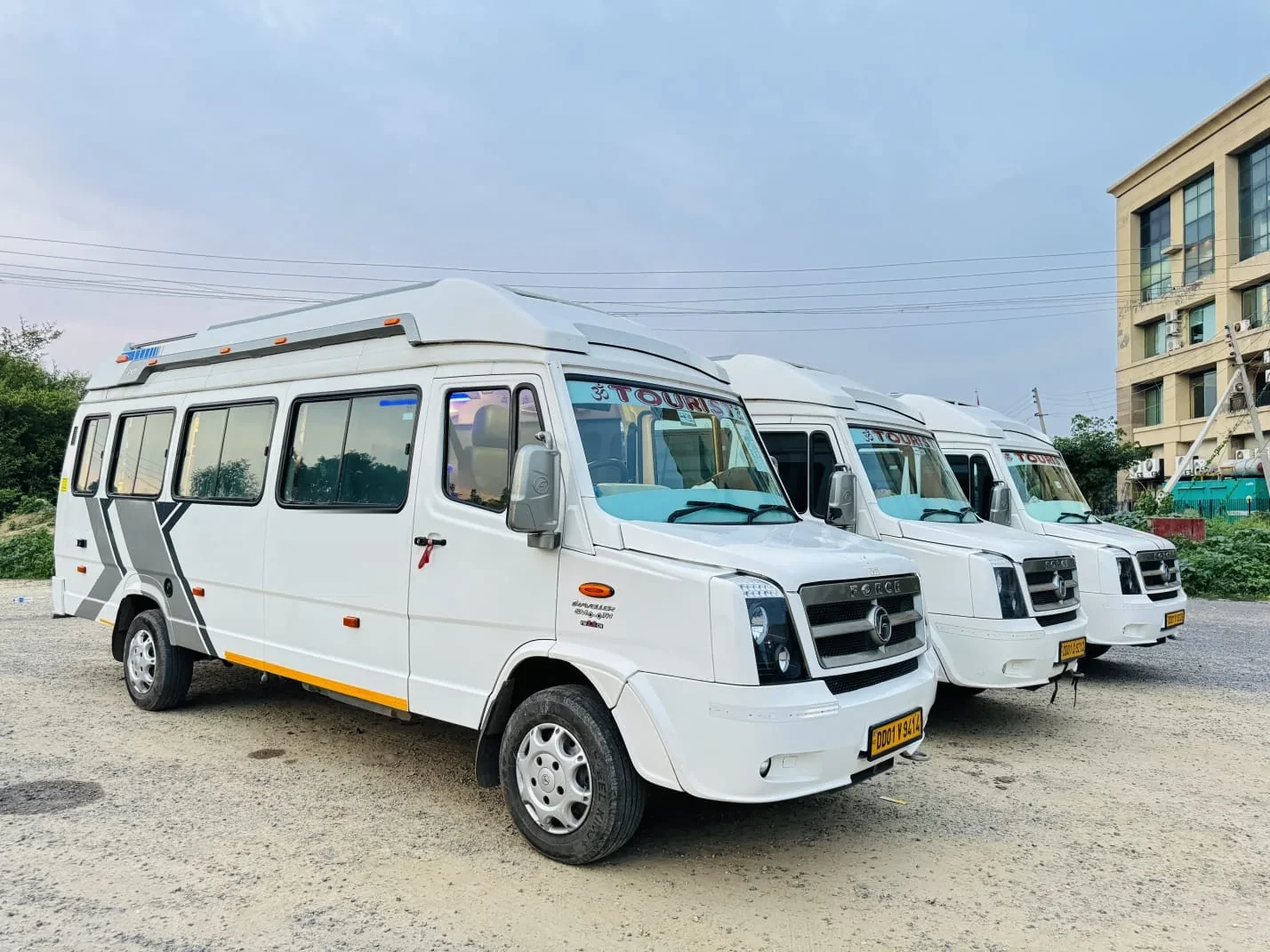
Includes pre-processed LAHDC Inner Line Permits, 8 stamped checkpoint sets, luxury hotel & premium Nubra camp stays, certified oxygen-equipped Innova Crysta cabs, and native Ladakhi mountain captains.
Module 6: Frequently Asked Questions (FAQ)
1. Is an Inner Line Permit (ILP) required for Indian tourists visiting Ladakh in 2027?
Yes, Indian citizens traveling to protected border areas in Ladakh such as Nubra Valley, Pangong Tso, Turtuk, Hanle, and Tso Moriri are legally required to obtain an authentic Inner Line Permit (ILP) issued by the LAHDC Leh administration.
2. Which places in Ladakh require an Inner Line Permit?
Permits are mandatory for Nubra Valley (Diskit, Hunder, Turtuk), Pangong Tso (Spangmik, Merak), Hanle Dark Sky Reserve, Tso Moriri, Chushul, and Tsaga La. Local Leh town sightseeing and Sham Valley (Alchi, Likir, Sangam) do not require permits.
3. How many printouts of the Ladakh permit should I carry?
You should carry at least 6 to 8 physical hard copies of your printed Inner Line Permit along with matching government photo ID photocopies, as military and ITBP checkpoints across remote Ladakh physically collect and file a paper copy at each barrier gate.
4. What is the official fee for a Ladakh Inner Line Permit?
The statutory government fee totals approximately ₹540 to ₹600 per person for a standard 7-day tour, combining a ₹400 environmental fee, daily wildlife fees (₹20/day), and a ₹100 Red Cross contribution.
5. Can foreign tourists visit Hanle and Pangong Tso with an ILP?
Foreign nationals require a Protected Area Permit (PAP) rather than an ILP, and must apply in groups of at least two persons through registered local Ladakhi agencies. Certain sensitive border zones like Turtuk or Chushul remain restricted for foreign passport holders.