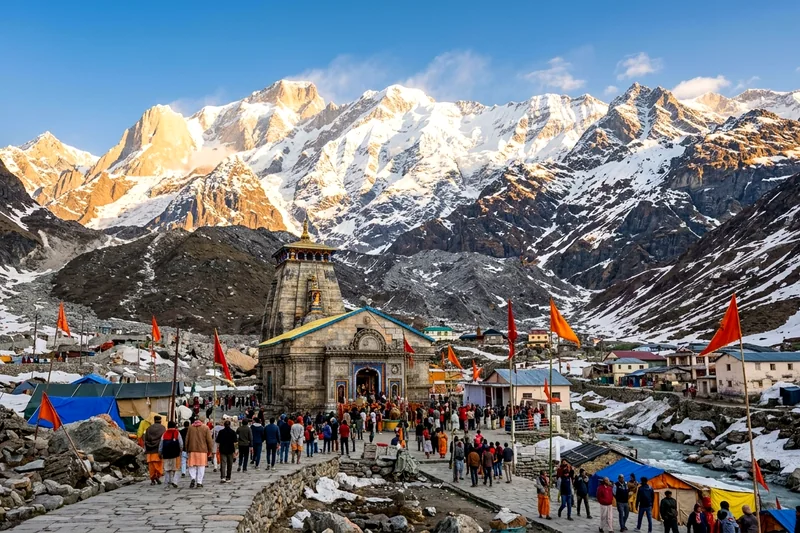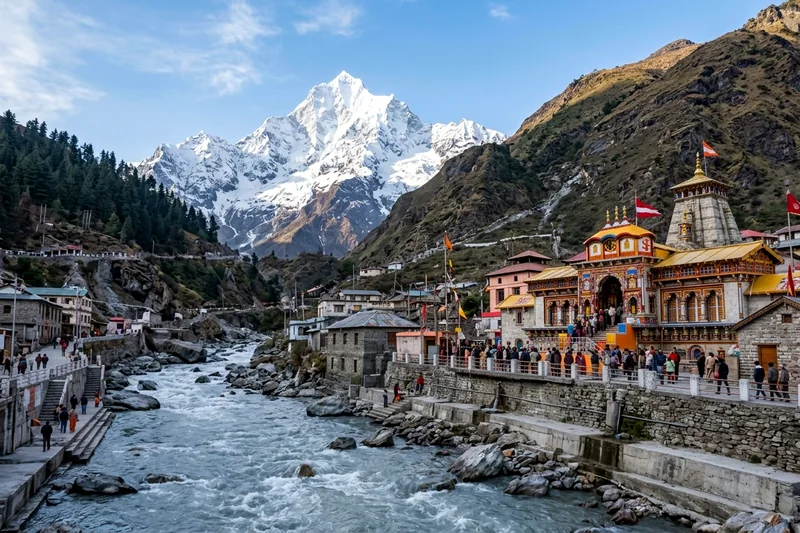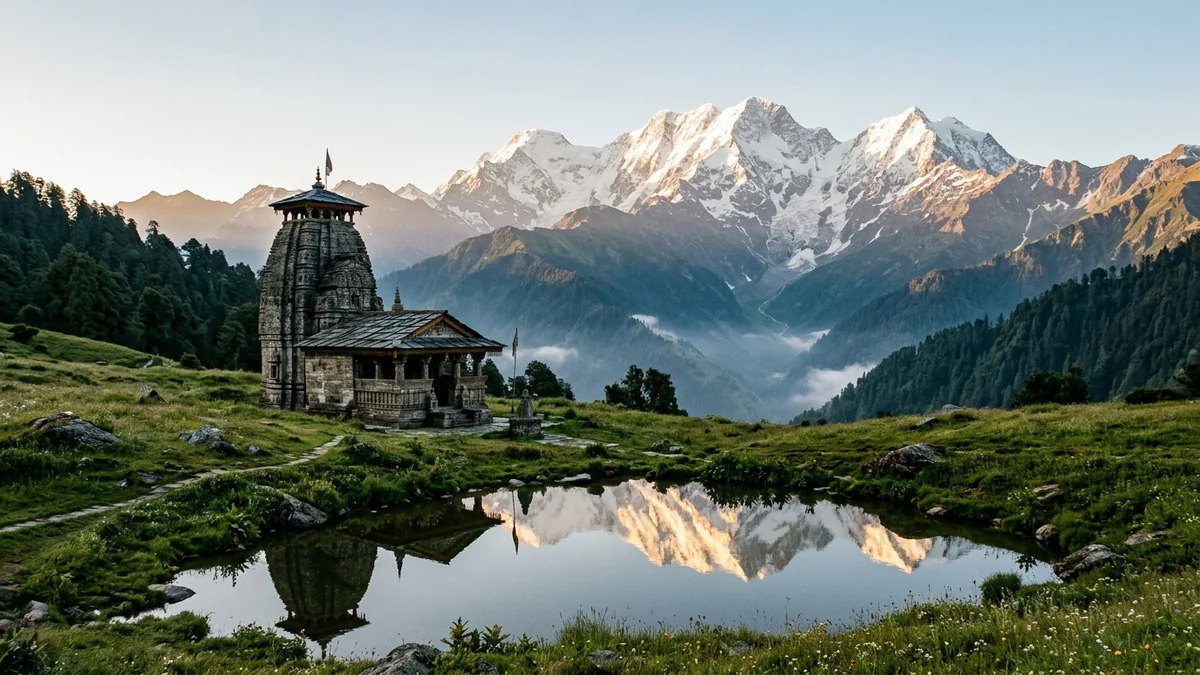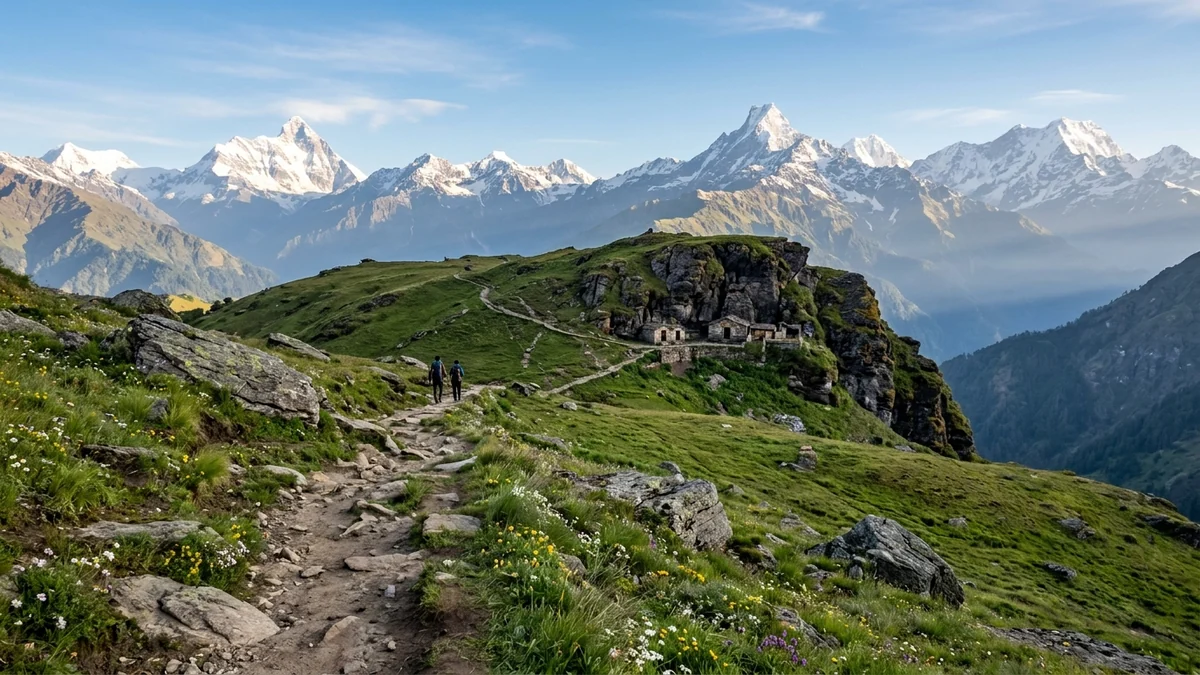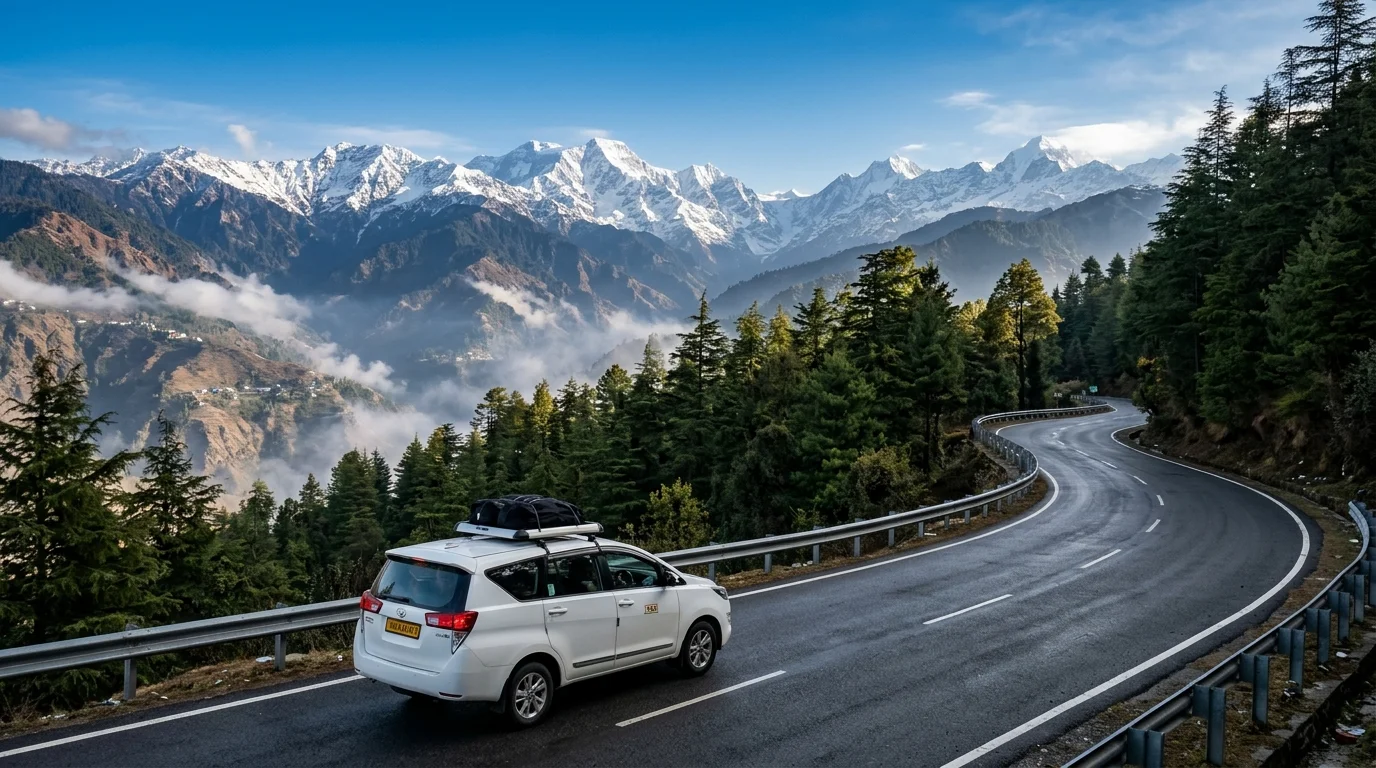
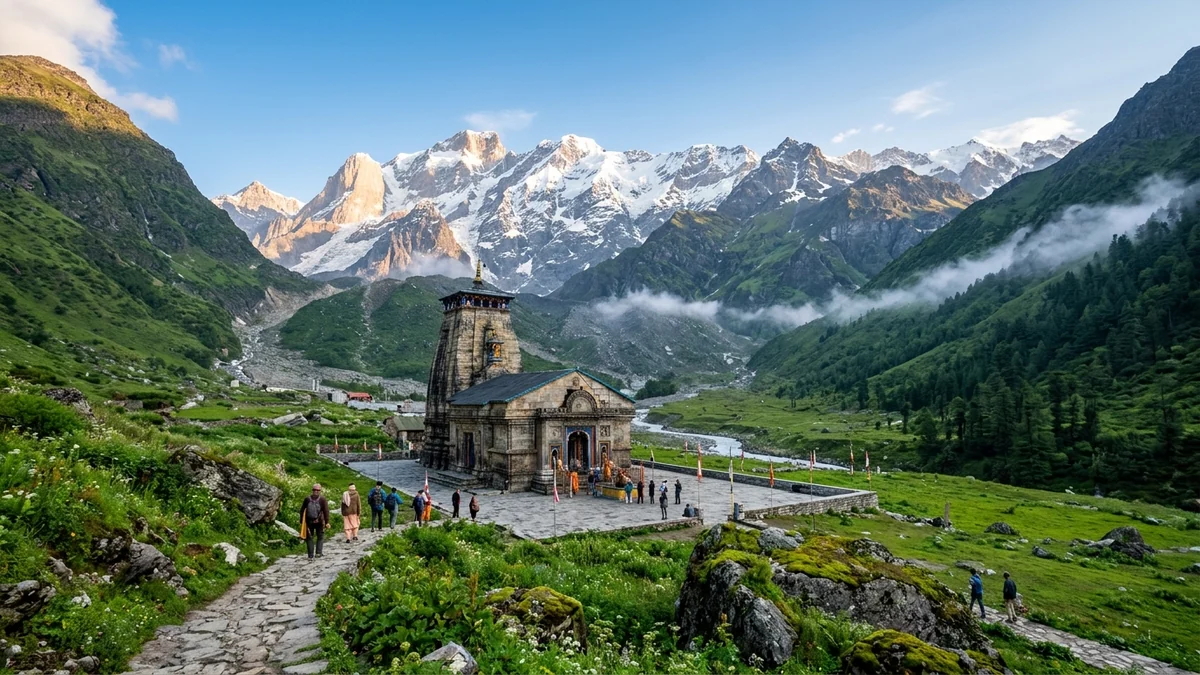
The Panch Kedar Yatra is a sacred 10-to-12-day pilgrimage across five ancient Shiva temples in Uttarakhand's Garhwal Himalayas: Kedarnath, Madhyamaheshwar, Tungnath, Rudranath, and Kalpeshwar. Because these shrines sit in separate mountain valleys, the circuit requires roughly 95 to 107 km of total trekking linked by 450 to 500 km of road transfers. The best travel windows are May to mid-June and mid-September to October. Complete packages from Dehradun or Delhi range from ₹34,999 to ₹39,999 per person.
Few spiritual journeys in India test both devotion and endurance quite like the Panch Kedar Yatra. Unlike the road-connected Char Dham highway circuit, visiting all five sacred abodes of Lord Shiva takes you deep into forest sanctuaries, high alpine meadows (bugyals), and remote mountain villages where mobile signals vanish for days.
Most travel websites treat the Panch Kedar Yatra as a simple checklist of five shrines. When pilgrims actually reach the hills, they run into confusing route backtracking, strict wildlife check-post cutoffs, zero ATM connectivity, and unrealistic pony promises. This ground-verified 2027 master guide bridges spiritual tradition with real-world mountain logistics so you can plan your Panch Kedar trek safely from Delhi, Haridwar, or Dehradun.
1. The Sacred Legend & Traditional Sequence of Panch Kedar
According to the Mahabharata legend, after the battle at Kurukshetra, the Pandava brothers came to the Garhwal Himalayas seeking Lord Shiva's forgiveness for fratricide. To test their penance, Shiva disguised himself as a divine bull (Nandi) and vanished into the earth at Guptkashi. When he re-emerged across five Himalayan valleys, five distinct anatomical parts of his form manifested as natural rock-shrine lingams.
Traditionally, devotees worship the five shrines in a strict anatomical and theological sequence:
| Order | Sacred Shrine | Divine Form | Altitude | Base Roadhead | One-Way Trek |
|---|---|---|---|---|---|
| 1st Kedar | Kedarnath Temple | Hump (Prishtha) | 3,583 m (11,755 ft) | Gaurikund (via Sonprayag) | 16 – 18 km |
| 2nd Kedar | Madhyamaheshwar | Navel (Nabhi) | 3,497 m (11,473 ft) | Ransi Village (via Ukhimath) | 16 – 18 km |
| 3rd Kedar | Tungnath Temple | Arms (Bahu) | 3,680 m (12,073 ft) | Chopta Base | 3.5 – 4 km |
| 4th Kedar | Rudranath Temple | Face (Mukha) | 3,600 m (11,811 ft) | Sagar Village (via Gopeshwar) | 20 – 22 km |
| 5th Kedar | Kalpeshwar Temple | Matted Hair (Jata) | 2,200 m (7,218 ft) | Urgam Valley (via Helang) | 1 – 2 km walk |
Important Note on Kalpeshwar: Among all five shrines, Kalpeshwar is the only Panch Kedar temple accessible throughout all 12 months of the year. The remaining four temples close their inner sanctum doors (kapat) for winter between October and November and reopen between late April and May.
2. Mythological Sequence vs. The Practical Ground Route
Here is the single biggest logistical fact most online guides skip: you cannot walk continuously from one Kedar to the next on a single trail. Each temple sits in a separate river valley separated by steep mountain ridges.
Fortunately, the traditional religious order aligns almost cleanly with an eastbound Himalayan road loop! By connecting the trailheads with an experienced hill vehicle, you save nearly 300 kilometers of unnecessary backtracking:
- Leg 1 (Mandakini Valley): Drive Haridwar → Guptkashi → Sonprayag. Complete Kedarnath trek and return to Guptkashi/Ukhimath.
- Leg 2 (Madhyamaheshwar Valley): Drive Guptkashi/Ukhimath (1.5 hrs) → Ransi Village. Complete the Madhyamaheshwar trek and descend back to Ransi.
- Leg 3 (Chopta Ridge): Drive Ransi → Ukhimath → Chopta (~1.5 hrs). Ascend Tungnath Temple (highest Shiva shrine on Earth) and Chandrashila summit.
- Leg 4 (Mandal-Gopeshwar Sanctuary): Drive Chopta through Mandal Forest → Sagar Village (~1.5 hrs). Complete the Rudranath trek via Panar Bugyal.
- Leg 5 (Alaknanda-Urgam Gorge): Drive Gopeshwar → Chamoli → Helang → Urgam Valley (~2.5 hrs) for Kalpeshwar darshan, then drive out toward Haridwar/Dehradun.
Field Tip from Sachin Chauhan (Operations Director, Haridwar Desk):
"Do not book a point-to-point drop taxi to Guptkashi or Ransi thinking you will find local cabs at the trailheads. Remote base villages like Ransi and Sagar have almost zero idle commercial taxis waiting for outside tourists. Keeping one dedicated hill vehicle (Dzire, Bolero, Ertiga, or Innova) waiting through the circuit prevents getting stranded between valleys."
3. Choosing Your Blueprint: 10-Day Fast Circuit vs. 12-Day Standard Yatra
Depending on whether you start from Dehradun/Haridwar or depart from New Delhi, travelers generally choose between a fast cab-assisted 10-day loop or a balanced 12-day expedition.
10-Day Express Route (Ex-Dehradun / Haridwar)
Built for fit trekkers and working professionals flying into Jolly Grant Airport or arriving by train at Haridwar. Uses direct vehicle transfers to trailheads (Gaurikund, Ransi, Chopta, Sagar, Urgam) and tighter daily trek-plus-drive combos.
- Pace: Fast, demands strong daily stamina.
- Package Price: Starting ₹34,999 per person.
12-Day Classic Circuit (Ex-Delhi)
Includes highway transit to and from Delhi, dedicated evening Ganga Aarti at Haridwar/Rishikesh, smoother acclimatization halts at Gaundar and Panar Bugyal, and a safer return buffer via Rudraprayag.
- Pace: Balanced, better acclimatization & lower fatigue.
- Package Price: Starting ₹39,999 per person.
4. Complete Day-by-Day 12-Day Panch Kedar Itinerary (Field-Tested)
This proven 12-day schedule connects every valley cleanly while preserving physical recovery windows before steep ascents like Rudranath and Madhyamaheshwar:
Day 1: Delhi to Haridwar / Rishikesh (230 km | 6–7 hrs drive)
Early pickup from Delhi. Drive along the Delhi-Haridwar highway, check in, and attend evening Ganga Aarti at Har Ki Pauri or Triveni Ghat.
Day 2: Haridwar to Guptkashi via Devprayag & Rudraprayag (220 km | 8–9 hrs drive)
Follow the Alaknanda and Mandakini rivers up to Guptkashi. Complete final ATM withdrawals and purchase basic trekking poles or rain ponchos here.
Day 3: Guptkashi to Gaurikund & Trek to Kedarnath (16–18 km trek)
Drive to Sonprayag, shift to the mandatory local union jeep to Gaurikund, and ascend to Kedarnath Jyotirlinga (3,583 m). Attend evening Sandhya Aarti and stay overnight near the temple.
Day 4: Kedarnath Morning Darshan & Descent to Guptkashi
Complete early morning Abhishek darshan, trek down 16 km to Gaurikund, and drive back to your Guptkashi hotel for a proper hot shower and rest.
Day 5: Guptkashi to Ransi Village & Trek to Gaundar (6 km walk)
Short 1.5-hour drive via Ukhimath to Ransi village. Walk a pleasant downhill and forest trail to Gaundar homestay village along the Madhyamaheshwar Ganga.
Day 6: Gaundar to Madhyamaheshwar Temple (10 km steep trek)
Ascend past Bantoli confluence through Khatara Dhar and Nanu Chatti. Reach the lush meadow of Madhyamaheshwar (3,497 m) with sweeping views of the Chaukhamba peaks.
Day 7: Budha Madhyamaheshwar Sunrise & Return to Chopta
Take the dawn 2-km walk to Budha Madhyamaheshwar pond for mirror reflections of Chaukhamba, descend 16 km to Ransi, and drive to Chopta meadows.
Day 8: Chopta to Tungnath Temple & Chandrashila Peak (5 km each way)
Climb the well-paved stone path to Tungnath (3,680 m) and push to Chandrashila Summit (4,000 m) for a 360-degree Himalayan panorama. Afternoon drive to Sagar Village or Gopeshwar.
Day 9: Sagar Village to Panar Bugyal (10–12 km steep trek)
Cross the Kedarnath Wildlife Sanctuary forest checkpoint before 2:00 PM. Ascend steadily through Pung Bugyal and Lyuti Bugyal to camp at Panar Bugyal (~3,400 m).
Day 10: Panar Bugyal to Rudranath Temple & Return to Sagar / Pipalkoti
Cross the wind-swept Pitra Dhar ridge (~4,000 m) to reach the sacred rock-face cave shrine of Rudranath (3,600 m). After darshan, stay overnight at temple dharamshalas or descend via Panar to Gopeshwar/Pipalkoti (note: slower hikers add a buffer night at Rudranath).
Day 11: Drive to Urgam Valley, Kalpeshwar Darshan & Rudraprayag
Drive via Helang into picturesque Urgam Valley. Take the gentle 1–2 km walk past apple orchards to Kalpeshwar cave shrine, then drive downstream to Rudraprayag.
Day 12: Rudraprayag to Haridwar & Delhi Return (320 km | 9–10 hrs)
Drive back through Srinagar and Rishikesh to Delhi or Haridwar, completing your entire Panch Kedar pilgrimage.
5. Complete 2027 Budget, Helicopter & Pony / Doli Cost Breakdown
Knowing what is officially available—and where modern transport stops—prevents budget shocks on the mountain:
| Expense Category | 2027 Estimated Cost Range | Ground Reality & Booking Notes |
|---|---|---|
| Guided Group / Fixed Package | ₹34,999 – ₹44,000 / person | All-inclusive 10 to 12 days covering shared/triple stays, meals, permits, and guides. |
| Private Taxi Hiring (Exclusive Cab) | Sedan: ₹24,000 – ₹30,000 SUV (Ertiga/Innova): ₹32,000 – ₹55,000 |
Covers full multi-day round trip from Haridwar/Dehradun. Haridwar–Ukhimath one-way drops average ₹5,000–₹7,000. |
| Helicopter Service Availability | ₹4,000 – ₹5,000+ (One-way Kedarnath) | CRITICAL FACT: Commercial helicopters operate ONLY for Kedarnath (Phata/Sersi/Guptkashi). There are zero helicopter services for Madhyamaheshwar, Tungnath, Rudranath, or Kalpeshwar. |
| Ponies / Mules (Kedarnath & Tungnath) | Kedarnath: ₹2,500 – ₹3,500 (1-way) Round Trip: ₹4,500 – ₹6,000 |
Officially union-regulated at Sonprayag/Gaurikund and Chopta. On Rudranath, mules cannot climb past Panar/Pitra Dhar ridges. |
| Doli / Palanquin & Porters | Doli (Kedarnath): ₹7,000 – ₹10,000+ Personal Porter: ₹1,000 – ₹1,500 / day |
Doli charges scale strictly by passenger body weight. Confirm weight slabs directly at the local union counter. |
6. Kapat Opening & Closing Calendar + Best Travel Windows
Because four of the five Kedars stand above 3,200 meters, heavy winter snow keeps them closed for nearly six months every year. While exact 2027 dates are officially declared by the Badri-Kedar Temple Committee on Maha Shivratri (early 2027), the seasonal cycle follows the winter seat traditions closely:
- Late April to May Opening: Kedarnath opens first (late April / Akshaya Tritiya), followed sequentially in May by Tungnath, Rudranath, and Madhyamaheshwar.
- Winter Seats (Gaddi Sthal): When snow arrives in October–November, the idols of Kedarnath and Madhyamaheshwar move to Omkareshwar Temple in Ukhimath; Tungnath shifts to Makkumath; and Rudranath shifts to Gopinath Temple in Gopeshwar.
- Best Window 1 (May to mid-June): Crisp mornings, snow patches lingering near Chandrashila and Pitra Dhar, active camp facilities. Expect peak rush at Kedarnath.
- Best Window 2 (Mid-September to October): Clear post-monsoon air, sharp panoramic mountain views, golden meadows, and calmer trails.
- Monsoon Warning (July & August): Strongly avoid interior valleys in peak monsoon. Landslides frequently block roads around Rudraprayag, Ukhimath, and Helang, while high leech activity affects the Ransi and Sagar jungle stretches.
7. Mandatory Registrations, Fitness & Digital Blackout Reality
Before packing your rucksack, handle these non-negotiable administrative and health checks:
- Official Yatra & Wildlife Permits: Complete mandatory biometric registration online via the Tourist Care Uttarakhand portal before departing. Additionally, carry physical paper printouts of your registration and Kedarnath Wildlife Sanctuary passes—smartphones cannot fetch digital QR codes in zero-network zones like Sagar forest checkpoint.
- The 6-Week Cardio Rule: Do not treat Panch Kedar as an ordinary hill vacation. Start brisk walking, stair climbing with a 6-kg daypack, and lung/cardio conditioning at least 6 weeks prior. Senior citizens should undergo a thorough medical checkup for blood pressure and respiratory fitness.
- Mobile Network & Cash Blackouts: Strong 4G signals (Jio/Airtel/BSNL) and working ATMs stop at Guptkashi, Ukhimath, and Gopeshwar. Once you walk above Gaurikund, Ransi, or Sagar Village, UPI apps fail completely. Carry sufficient ₹100 and ₹500 cash notes for homestays, dhabas, and porters.
- Essential Gear Checklist: Waterproof ankle-support trekking shoes (broken in 3 weeks prior), zero-degree rated thermal innerwear, windproof shell jacket, rain poncho, two trekking poles, reusable water bottle, portable emergency oxygen canister, and basic blister/first-aid supplies.
Book Our All-Inclusive 2027 Panch Kedar Yatra Packages
Eliminate route confusion, remote homestay hunting, and forest permit stress. Travel with experienced Garhwali guides, verified hill chauffeurs, and 24x7 Haridwar operations support.