Direct Answer: What is Winter Char Dham Yatra?
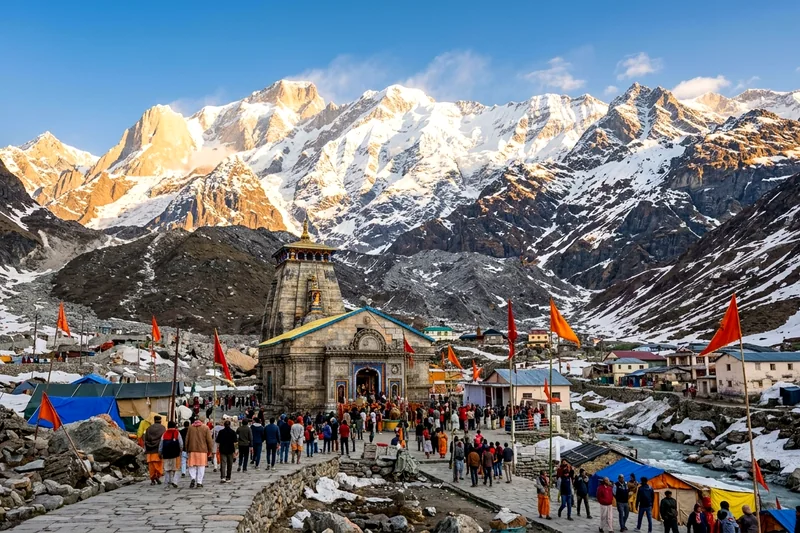
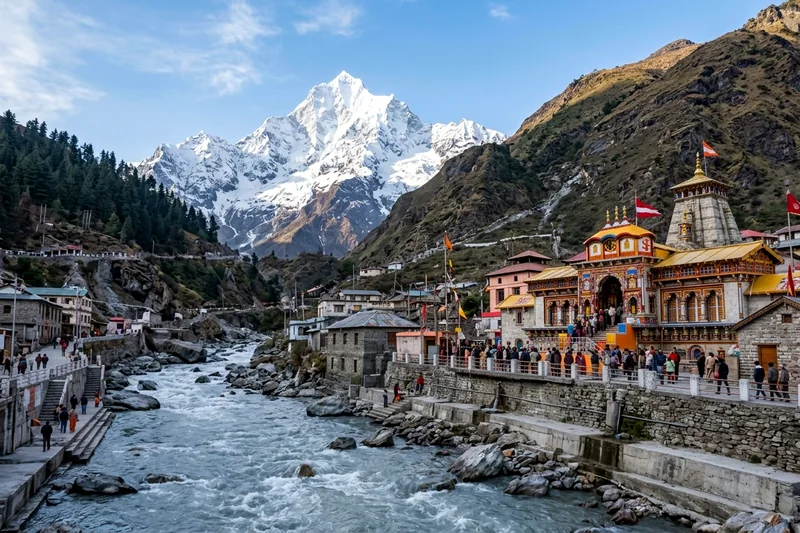
The sacred Winter Char Dham Yatra allows devotees to worship the divine deities of the four shrines during winter (November to April) when the high-altitude Himalayan temples remain buried under deep snow. The divine idols (Utsav Vighrahas) reside at their consecrated winter abodes in lower valleys: (1) Goddess Yamuna at Kharsali Village (Shani Dev Temple); (2) Goddess Ganga at Mukhba Village (near Harsil Valley); (3) Lord Shiva (Kedarnath) at Omkareshwar Temple, Ukhimath; and (4) Lord Badri Vishal at Narsingh Temple, Joshimath & Pandukeshwar. Unlike the summer yatra, the winter circuit is completely accessible by road with zero trekking, peaceful zero-queue darshan, and warm valley stays.
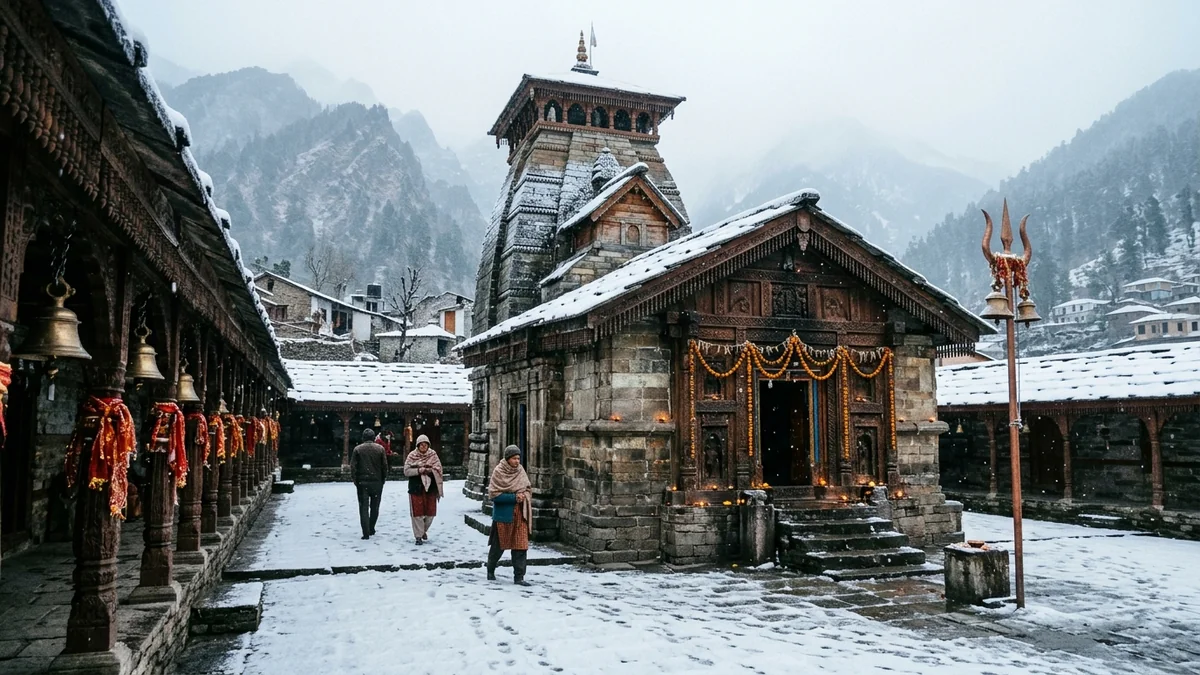
Every year, after Diwali, a sacred transition takes place in the Garhwal Himalayas. The temple doors at 3,500+ meters altitude are closed, and in spectacular cultural processions, the deities are escorted down to the warmth of the lower valleys. Yet, surprisingly few travelers outside Uttarakhand realize that the spiritual energy and pujas never stop.
The Winter Char Dham Yatra is Uttarakhand’s best-kept spiritual secret. With roads open year-round, luxury boutique mountain resorts offering cozy fireplace stays, and zero kilometer-long queues, winter pilgrimage offers an intimate, meditative spiritual communion impossible during the frantic summer rush.
1. The 4 Consecrated Winter Abodes (Detailed Guide)
1. Omkareshwar Temple, Ukhimath (Winter Seat of Lord Kedarnath)
Located at an elevation of 1,311 meters, Ukhimath is the administrative and spiritual capital of the Rawals of Kedarnath. The five-faced idol (Panchmukhi Murti) of Lord Shiva is installed here, and regular daily aartis (morning and evening Sandhya aarti) are performed with identical rituals as Kedarnath Dham.
2. Narsingh Temple, Joshimath (Winter Seat of Lord Badrinath)
The centuries-old Narsingh Temple in Joshimath houses the winter worship of Lord Badri Vishal. Legend holds that the right wrist of the Narsingh idol becomes progressively thinner every year. When it breaks, the Nar and Narayana mountains will meet, and Badrinath will relocate to Bhavishya Badri.
3. Mukhba Village (Winter Seat of Goddess Ganga)
Perched just 1 km across the Bhagirathi river from Harsil, Mukhba is an enchanting village surrounded by snow-dusted apple orchards. The sacred idol of Maa Ganga rests in a traditional wooden Garhwali temple, maintained lovingly by the Semwal priestly clan.
4. Kharsali Village (Winter Seat of Goddess Yamuna)
Opposite Janki Chatti lies Kharsali, home to one of India’s oldest multi-tiered wooden temples dedicated to Lord Shani Dev. Goddess Yamuna resides here as the revered sister of Shani Dev, receiving daily prayers and cooked bhog throughout the winter months.
2. Ideal 6-Day Winter Char Dham Circuit Itinerary (Haridwar to Haridwar)
- Day 1: Haridwar ➔ Mussoorie bypass ➔ Barkot / Kharsali (Yamunotri Winter Darshan).
- Day 2: Kharsali to Uttarkashi (Visit Kashi Vishwanath Temple).
- Day 3: Uttarkashi ➔ Harsil & Mukhba Village (Gangotri Winter Darshan) ➔ Return to Uttarkashi.
- Day 4: Uttarkashi ➔ Ghansali ➔ Ukhimath (Lord Kedarnath Omkareshwar Darshan).
- Day 5: Ukhimath ➔ Chopta snow view ➔ Joshimath (Lord Badri Vishal Narsingh Temple Darshan).
- Day 6: Joshimath ➔ Devprayag Sangam ➔ Rishikesh ➔ Haridwar Drop.
Experience the Serenity of Winter Pilgrimage
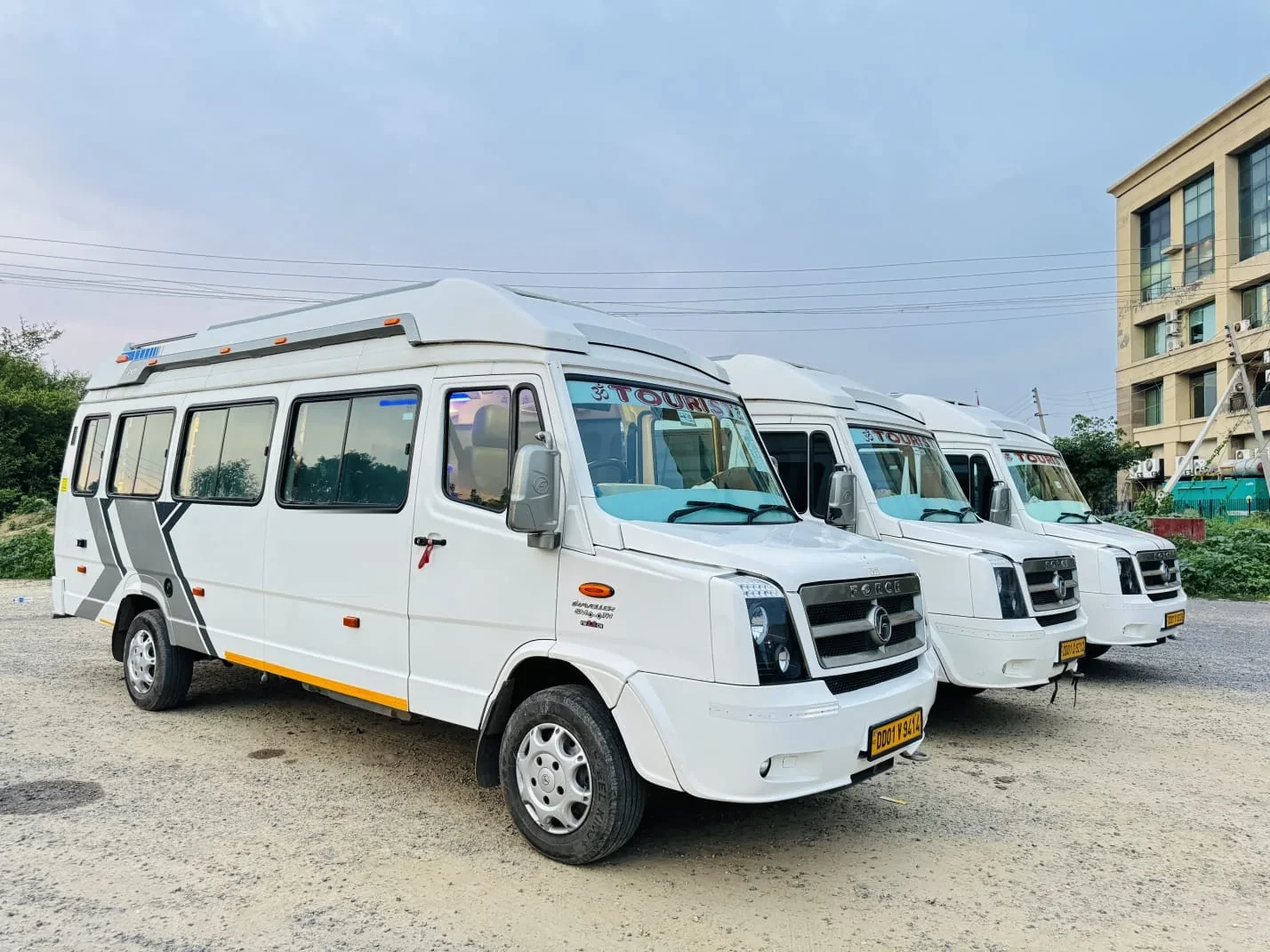
Travel in private heated Innova Crysta cabs, stay in charming heritage boutique properties, and experience intimate pujas with zero crowds.
Book Winter Pilgrimage Package